
Quick Nav
- The Catalyst of Campus Outreach
- The Framework of Peer-to-Peer Health Education
- On the Ground: Volunteer Experiences and Interactions
- Navigating Stigma: Scope and Limitations of Tour Interventions
- Measuring Community Impact and Engagement
- Pathways to Participation in Health Advocacy
The Catalyst of Campus Outreach
The organizing committee initially planned to distribute clinical pamphlets directly from the main stage during campus rallies. That approach missed the mark entirely. Students walking to class do not want a megaphone lecture about sexual health. We shifted to setting up decentralized, peer-staffed tables near student unions.
The outreach tour spans roughly a two-to-three week window during the early fall semester. Advocates target high-traffic pedestrian zones around midday to ensure visibility. This puts volunteers right in the daily flow of campus life—a critical step in normalizing HIV/AIDS awareness. Bridging the gap between clinical health information and young adult audiences requires meeting them exactly where they are.
The Framework of Peer-to-Peer Health Education
Clinical memorization rarely translates to effective peer education. Curriculum developers structured the training modules around scenario-based roleplay rather than medical jargon. Volunteers need to practice navigating awkward conversational pauses.
Training requires a 12-hour weekend intensive. It is split into four distinct modules covering harm reduction, active listening, local resource mapping, and de-escalation. Shared experiences and vocabulary build immediate trust. When a student speaks to a peer, the power dynamic flattens. This aligns with proven community-level HIV prevention interventions.
On the Ground: Volunteer Experiences and Interactions
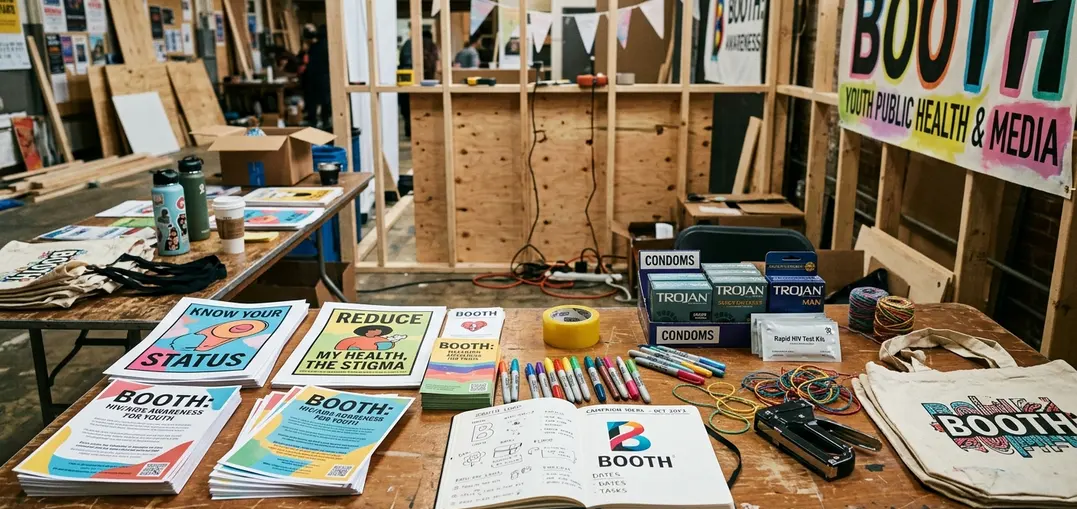
Managing an outreach booth requires logistical precision and emotional intelligence. Volunteers coordinate with campus health center staff the morning of the event to map out physical walking routes from the outreach booth to the clinic. Giving peers precise, landmark-based directions removes the guesswork.
Booths are stocked with upward of 300 to 400 safer sex kits per campus stop. These kits contain external condoms, internal condoms, dental dams, and water-based lubricant packets, alongside a QR code linking to local testing sites. This ongoing collaboration with local clinics ensures localized support.
Field Note: The effectiveness of condom distribution varies heavily by campus climate. At religiously affiliated institutions, volunteers often have to rely more heavily on discreet, off-campus referral cards rather than visible tabletop displays.
Navigating Stigma: Scope and Limitations of Tour Interventions
A single-day tour stop cannot replace comprehensive, ongoing campus healthcare. Interactions at the booth typically last between 45 seconds and three minutes. This provides a very narrow window to establish rapport and hand off resources.
The advocacy team deliberately removed immediate testing demands from their primary banners. They replaced them with broader awareness messaging. Community feedback indicates that demanding immediate action during class transitions causes friction.
Important: Volunteers attempting to initiate conversations by asking direct questions about a peer's sexual history immediately trigger defensive body language and cause students to walk away.
One catch exists. These brief peer interventions are highly dependent on the capacity of the host university's health center. If the local clinic has a multi-week waitlist for STI screening, the immediate referral momentum generated by the tour is severely blunted. Volunteers are trained to act as catalysts for long-term clinic visits rather than final solutions.
Measuring Community Impact and Engagement
Gauging effectiveness without violating privacy requires a nuanced approach. Organizers track the scan rates of localized QR codes distributed at the booths over the three days following the campus visit. This avoids asking students to fill out intrusive clipboards in public.
Our program data showed that post-tour engagement metrics focus on the volume of digital resource downloads. The team also tracks direct messages sent to the initiative's social media accounts within the first couple of days after departure. While these metrics provide a strong baseline, they represent a snapshot rather than a complete longitudinal study. Shifts in campus dialogue surrounding HIV/AIDS prevention often surface in these digital spaces long after the physical tour departs.
Pathways to Participation in Health Advocacy
Public health needs passionate student voices. Recruitment coordinators prioritize onboarding students who are already active in campus cultural or social organizations. These individuals bring pre-existing trust networks that take months to build from scratch.
The application window for the spring cohort remains open for about three weeks in late November. It requires a brief written statement and a 15-minute virtual interview. Knowing your status is the ultimate flex. Protect yourself, protect your partner, and empower your community by joining the volunteer network.
Bottom Line: Peer advocacy transforms clinical directives into community action.
More Topics
Explore additional resources on culturally responsive outreach and youth engagement strategies across our platform.
Citations
- Centers for Disease Control and Prevention. Effective Interventions.








Your Thoughts
The conversation starts with you.
Your Comment