
The Emergence of Grassroots Advocacy Networks
The initial response to the epidemic in the 1980s and 1990s was largely driven by community organizers rather than federal institutions. Minority advocates formed coalitions to address the unique intersection of racial discrimination and health stigma. Early campaigns focused on basic survival, peer education, and distributing accessible prevention materials in urban centers.
Organizers initially attempted to distribute federal public health pamphlets. They quickly found the clinical language alienated the community. This prompted a shift toward creating and distributing their own zines using local slang. Advocates handed out these hand-stapled prevention zines at local nightclubs and block parties in the late-night hours.
The outcomes extended beyond education. Neighborhood care teams of roughly 3 to 5 volunteers formed to handle grocery deliveries and housing support.
Addressing Systemic Barriers in Public Health
Advocates had to navigate and dismantle institutional neglect and unequal access to early antiretroviral therapies. The shift from purely reactive care to proactive, community-based public health policy required sustained political pressure.
Field Note: Advocacy leaders mapped out the bureaucratic bottlenecks in local health departments. They systematically identified sympathetic clinic staff who could quietly facilitate after-hours testing without triggering punitive administrative oversight.
Community leaders partnered with local clinics to establish safe, non-judgmental testing environments. This response secured several hours of after-hours clinic time on Friday evenings for anonymous testing.
Access to medication required similar ingenuity.
Organizers set up phone trees to alert community members within hours when early antiretroviral shipments arrived at local pharmacies. This guaranteed that life-saving treatments reached those who needed them most—bypassing the delays of traditional distribution channels.
Cultural Competence in Prevention Strategies
Standardized public health messaging often failed to resonate with diverse populations due to language and cultural disconnects. Directly translating clinical public health terminology into local dialects without cultural adaptation often resulted in community alienation and increased stigma.
Community feedback indicates that health educators needed a different approach. They built outreach frameworks by first holding listening sessions with local faith leaders. Using those conversations, they organically developed prevention scripts that aligned with community values.
The integration of faith-based organizations and local community centers has proven vital in reducing stigma and increasing testing rates. However, the effectiveness of faith-based outreach varied significantly depending on the specific denomination's historical stance on sexual health education.
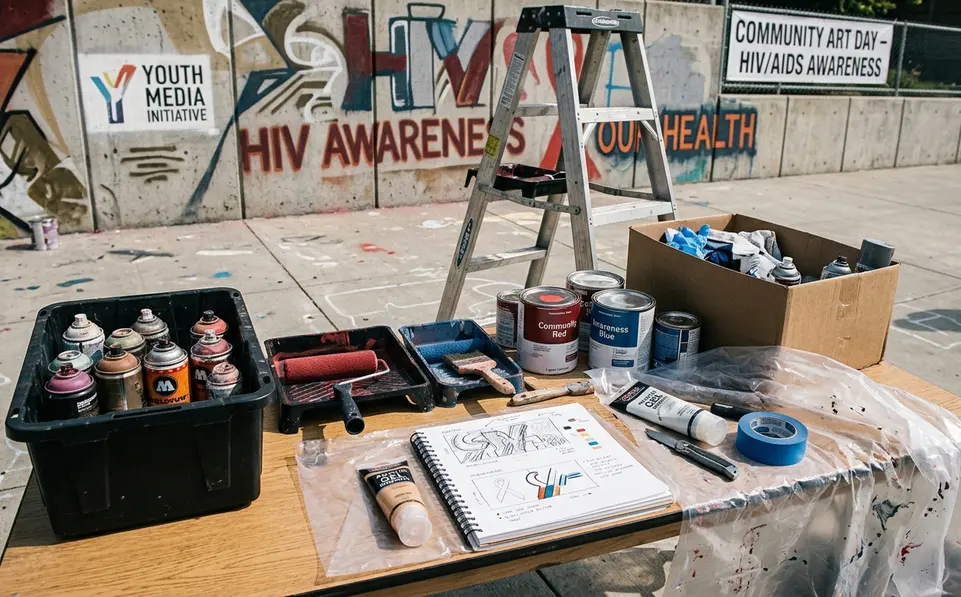
Advocates pioneered culturally specific outreach.
They hosted multi-week peer education workshops in church basements and community centers. Local muralists were also brought in to paint prevention messaging in high-foot-traffic urban corridors over a summer campaign. This multi-year effort transformed how public health engaged with marginalized neighborhoods.
The Transition to Youth-Led Health Initiatives
Modern advocacy has shifted toward empowering young adults and teens to lead peer-to-peer sexual health education. Digital media and social networks have become primary tools for modern outreach, replacing traditional print campaigns. Current initiatives focus on holistic sexual health, intersectionality, and dismantling generational stigma—a stark contrast to the fear-based messaging of the past.
Digital Literacy and Peer Education
Modern youth organizers design their campaigns by analyzing engagement metrics on short-form video platforms. They continuously adjust their messaging tone based on real-time feedback from peer-moderated spaces. Our program data showed that short vertical video campaigns—roughly 15 to 60 seconds—addressing PrEP access and U=U create the strongest engagement.
To support this ongoing work, organizations train peer educators through certified digital literacy and crisis response modules.
Important: Peer-led digital outreach requires continuous moderation to prevent the rapid spread of medical misinformation within closed group chats.
Scope and Limitations of Historical Public Health Data
Early epidemiological tracking frequently underrepresented the impact of the virus on minority populations. Historical records often lack nuanced demographic data, obscuring the specific contributions of localized grassroots movements.
Researchers reconstructing early grassroots impact developed a methodology of triangulating personal diaries, obituary columns in local minority newspapers, and oral histories to build a timeline of the movement. They cross-referenced local newspaper obituaries from 1984 through 1989 to identify unrecorded AIDS-related mortality clusters. Teams also digitized thousands of pages of handwritten meeting minutes from early coalition gatherings.
While these efforts provide a clearer picture, the methodology relies heavily on surviving documentation, which inherently skews toward organizations with the resources to archive their work. Reviewing historical public health records regarding HIV/AIDS reveals the stark contrast between official statistics and lived community experiences.
Bottom Line: Understanding these data gaps is essential for contextualizing the true scale of early advocacy efforts.








Your Thoughts
The conversation starts with you.
Your Comment