Strategic Framework of Outreach Initiatives
Public health campaigns often start in boardrooms—a top-down approach that looks perfect on paper but falls flat in the neighborhood. Planners initially mapped out a rigid messaging strategy for the recent World AIDS Day community events. During the early drafting phase, organizers recognized this disconnect and pivoted to a co-creation model. Local youth advisory boards took the reins to rewrite the core campaign materials. This shift ensured the messaging resonated with young adults and teens.
The planning window spanned three months, from late August to mid-November 2023. Translators adapted the finalized materials into four regional dialects. Collaboration with local health advocates established accessible information hubs across the city.
Youth-Centered Educational Workshops
Young people need safe, stigma-free environments to discuss sexual health. Facilitators initially tried using a standard 45-minute slide presentation for the curriculum, but dropped it after the first pilot session proved too passive. They replaced the lecture format with a rotating station model.
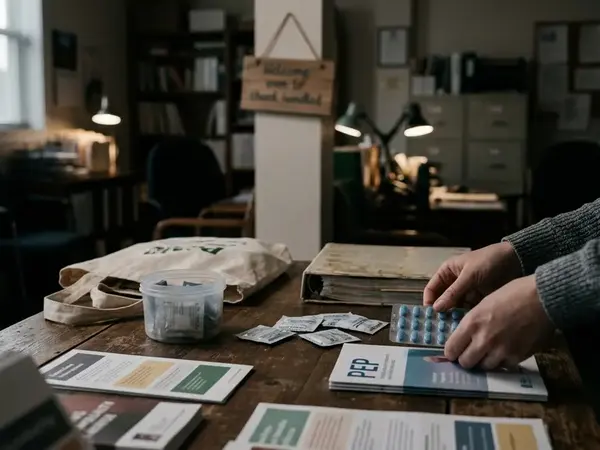
The new structure featured 15-minute interactive scenario-based discussion circles. Facilitators capped groups at 12 participants. This intimate setting encouraged open dialogue among peers. Participants received practical resources at each station, including preventative care information and support network directories. The revised curriculum delivered solid engagement. While these results indicate strong initial engagement, the methodology relies on self-reported attendance logs.
Implementation of Health Screenings
Community feedback indicates that privacy concerns often deter individuals from seeking on-site HIV testing. High-traffic community centers present a distinct logistical challenge for confidential clinical services.
Field Note: To solve the privacy challenge, organizers designed a dual-tent layout. Staff conducted intake in a semi-open reception area, while clinical personnel administered the actual rapid testing and counseling in private, enclosed spaces.
Deploying three mobile testing units equipped with sound-dampening partitions guaranteed patient privacy. Ongoing partnerships with certified healthcare professionals maintained clinical accuracy. Rapid testing turnaround times ranged from 20 to 30 minutes. Staff established immediate linkage to care protocols for individuals requiring follow-up support.
Operational Scope and Resource Limitations
Resource allocation required strict prioritization. The logistics team concentrated mobile testing units exclusively within a three-mile radius of major transit hubs to reach as many people as possible. Organizers concentrated intensive outreach over a 72-hour period surrounding December 1—a temporal limitation that forced teams to work with extreme efficiency.
Teams directed individuals seeking broader context to official World AIDS Day resources.
Messaging effectiveness varies significantly depending on whether the community center is located in a neighborhood with existing, visible LGBTQ+ support infrastructure.
Important: The immediate linkage to care protocol relies entirely on the availability of local clinic intake slots, meaning individuals testing positive during weekend outreach hours often face a 48-hour delay before formal clinical onboarding.
Sustaining Advocacy Beyond World AIDS Day
Awareness days generate momentum. The challenge lies in maintaining youth engagement throughout the calendar year. Rather than launching a completely new digital campaign post-event, the media team opted to repurpose user-generated questions from the workshops.
They transformed these inquiries into a weekly anonymous Q& A series on social media. This series ran for 16 weeks post-event. It reinforced the practical health practices introduced during the outreach. The program also focused on transitioning event attendees into a 6-month peer educator mentorship track.
Bottom Line: Our program data showed a sharp drop-off in peer educator retention when follow-up communication is delayed beyond 14 days post-event.






Your Thoughts
The conversation starts with you.
Your Comment