
Knowing your status is the ultimate flex. But if the path to that knowledge runs only through fear, shame, and clinical warnings, a lot of young people will never take the first step. I start from a simple first principle: people protect what they value. When HIV prevention education treats sex as a hazard to manage rather than a part of life that can include care, pleasure, and mutual respect, it teaches young adults to disconnect from their own bodies. Disengagement follows. High-risk choices follow that.
Quick Nav
- The Limitations of Fear-Based Messaging
- Redefining Risk Through the Lens of Self-Worth
- Practical Implementation in Community Outreach
- Navigating Boundaries and Relationship Dynamics
- A Unified Framework for Future Health Advocacy
The Limitations of Fear-Based Messaging
Failing to address pleasure in sexual health education does not stay theoretical. It alienates young adults in real time. They check out of the room. They stop asking questions. Stigma fills the silence, and high-risk behaviors keep circulating because nobody feels safe enough to name what they actually want or fear.
Traditional HIV prevention models built their foundation on risk aversion. Clinical warnings. Graphic outcomes. The message was clear: sex is dangerous, and your job is to avoid catastrophe. That framing generates shame more often than it generates actionable understanding.
Shame isolates. Once someone feels marked by it, they become less likely to seek testing, less likely to ask a clinician a direct question, and less likely to talk openly with a partner about condoms, PrEP, or status. I watched curriculum designers map out standard clinical risk modules, then sit with youth advisory boards during pilot reviews. The boards pushed back hard on the emotional isolation those modules created. Review cycles ran roughly six to eight weeks. The shift that stuck was structural: move from forty-five-minute clinical lectures to twenty-minute interactive peer dialogues. Shorter. Human. Built for conversation instead of compliance.
Simply adding the word “pleasure” to existing clinical pamphlets without changing the underlying fear-based tone often results in immediate rejection. Youth audiences clock the effort as inauthentic. They are right to.
Redefining Risk Through the Lens of Self-Worth
Here is the reframe I use when I rebuild a session from the ground up.
Self-esteem is not a soft add-on to HIV & AIDS education. It is a driver of proactive decision-making. When youth learn to value their own physical and emotional pleasure, they gain a concrete reason to advocate for their safety. Protecting well-being stops sounding like a rule imposed from outside and starts sounding like self-respect in action.
That means shifting the educational focus from “avoiding disease” to “protecting well-being and enhancing positive experiences.” Risk does not disappear in that frame. It gets redefined through the lens of what someone wants to keep intact: trust, sensation, continuity of care, the right to say yes and the right to say no.
Health educators I work alongside restructured intake questionnaires with this in mind. They moved away from deficit-based risk assessments and built in questions about relationship satisfaction and personal boundaries. Intake sessions last fifteen to twenty-five minutes. Within that window, three to five open-ended questions about emotional well-being and intimacy goals set a different tone before any clinical content lands. You establish the person first. The risk conversation follows from there, not the other way around.
Bottom Line: Young people protect the experiences they are allowed to claim as valuable. Teach them that pleasure and safety belong in the same sentence, and advocacy for testing, condoms, and PrEP stops feeling like a punishment.
Practical Implementation in Community Outreach
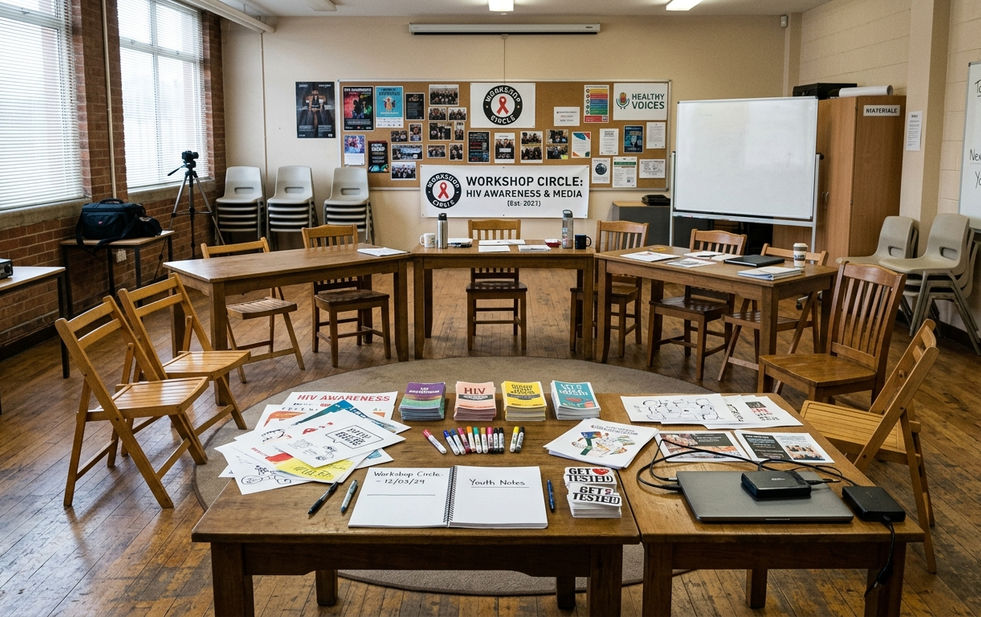
Theory only matters if it survives a community room on a Tuesday night. So how do you actually transition dialogue from clinical warnings to culturally relevant, scenario-based discussion?
I walk facilitators through a sequence.
- Drop the props that center anatomy over relationship context.
- Replace monologue with shared scenarios youth recognize from their own dating lives.
- Give the room enough time to argue, laugh, and correct each other.
- Keep every pleasure-inclusive claim tethered to accurate transmission science.
Outreach coordinators initially tried anatomical models to demonstrate pleasure-focused condom application. Feedback came back fast: too clinical, too awkward in community settings. They dropped the models. What replaced them worked better. Scenario-based card games featuring a dozen or so distinct relationship prompts. Workshop durations of sixty to ninety minutes so discussion has room to breathe. Peer-led formats where questions about intimacy and pleasure get treated as normal, not as interruptions.
While pleasure-inclusive education is critical for engagement, it must operate strictly within the boundaries of clinically accurate transmission data and established public health guidelines. Drawing on evidence-based sexual health education frameworks, the through-line stays the same: engagement without accuracy is entertainment, and accuracy without engagement is a lecture nobody finishes.
Important: Integrating pleasure-focused dialogue requires facilitators who have undergone specific trauma-informed training. Conversations about intimacy can inadvertently trigger participants with histories of sexual violence. Build that training into your staffing plan before you open the floor.
Navigating Boundaries and Relationship Dynamics
Verbal communication and boundary-setting are not soft skills bolted onto sexual health. They are core practical components of safe sex and prevention.
Before structured practice, many young adults freeze the moment a real negotiation starts. During engagement, role-play changes that. Facilitators developed modules by crowdsourcing real-world dating app interactions from community members, then selected scenarios that required negotiating PrEP or condom use without collapsing the intimacy of the moment. Role-play exercises break into three-minute to five-minute active negotiation segments. Small breakout groups of four to six participants give immediate peer feedback while the language is still fresh.
Outcomes show up in the room first. People hear themselves say the hard sentence out loud. They try a second version. They learn that asking for a condom or naming a PrEP routine does not have to erase desire.
Power dynamics sit underneath every one of those exchanges. Comprehensive education equips individuals to recognize coercion: pressure dressed up as romance, status used as leverage, silence treated as consent. Practice gives people a script and a spine.
Field Note: The effectiveness of role-playing negotiation tactics varies heavily depending on the cultural background of the participants. Strategies that land in highly individualistic urban settings may need significant adaptation for youth from tight-knit, conservative communities. Test your scenarios with local advisors before you scale them.
A Unified Framework for Future Health Advocacy
Public health narratives have to match modern youth culture, or they lose the audience they claim to serve. Sex-positive education that still tells the truth about HIV transmission reduces stigma over the long haul because it stops treating people who have sex as problems to manage. Community trust grows when testing and resources feel like tools for living well, not like evidence of failure.
Advocacy planners aligned a newer framework by mapping long-term community integration and choosing to co-author final curriculum guidelines with local youth advocates rather than relying solely on institutional drafters. Drafting periods ran three to four months. Bi-weekly feedback loops with youth advisory councils kept cultural relevance from becoming a slogan.
Media and campaigns built on that foundation stop whispering about pleasure as a liability. They treat sexual well-being and disease prevention as one project.
Adopt a holistic curriculum that holds sexual well-being and disease prevention as inseparable goals. Refuse to trade one for the other. If you still run fear-first modules with a pleasure sticker on the cover, scrap the sticker and rebuild the module. Your community deserves education that tells the truth about risk and still makes room for desire, dignity, and the decision to get tested because your life is worth protecting.








Your Thoughts
The conversation starts with you.
Your Comment