
Celebrity influence in sexual health is not magic. It is attention, trust, timing, and a clear next step working together.
When I look at a campaign about HIV testing, safer sex, or stigma reduction, I start with a plain question: after the post, the interview, the livestream, or the disclosure, can a young person do something useful in under a minute? If the answer is no, the campaign may still make noise, but noise is not care.
That distinction matters. A famous voice can open a door that health departments and clinics have been knocking on for years. But once that door opens, the message has to be culturally fluent, clinically sound, and close enough to home that someone can act on it before the moment passes.
Quick Nav
- Mechanisms of Media Influence in Public Health
- Bridging Communication Gaps in Youth Demographics
- Scope and Limitations of Celebrity-Led Campaigns
- Integrating Media Advocacy with Grassroots Action
Mechanisms of Media Influence in Public Health
How high-profile individuals act as catalysts for public health conversations
The first job of a celebrity advocate is not to explain viral load, testing windows, or prevention options. The first job is to make the topic sayable.
That sounds small until you sit with a teen who knows they should get tested but has never heard anyone they respect say the words out loud. Celebrity influence works because it lowers the social temperature. It turns a private fear into a public conversation, and that shift can make room for clinics, peer educators, parents, and partners to speak with less shame in the room.
The strongest campaigns I have seen do not choose advocates by total follower count alone. Public health teams have shifted toward looking at engagement within specific regional zip codes, especially where testing access, stigma, and misinformation overlap. A national name may bring attention, but a local audience match determines whether that attention reaches the young people most likely to need the message.
The transition from passive awareness to active engagement in youth demographics
Awareness is the easiest metric to inflate and the hardest one to defend.
A high-profile awareness push once generated millions of impressions but failed to increase local clinic foot traffic because the messaging lacked a clear, localized call-to-action. People saw it. People talked about it. Then the moment dissolved because no one had made the next step obvious.
Better measurement looks for movement. Teams monitor engagement spikes over the two to three days after a high-profile disclosure. They watch whether young people search for local testing centers, not just general disease terms. These signals are directional, not diagnostic; a spike in search or calls cannot prove behavior changed without clinic-level follow-up.
Bottom Line: Celebrity attention has value when it points somewhere. A post that says “get tested” is weaker than a post that says where, when, and what to expect when you walk in.
The importance of culturally relevant messaging in breaking down historical stigmas
Stigma has a memory. In many communities, sexual health messages land on top of older experiences with judgment, medical neglect, racism, homophobia, transphobia, and public embarrassment.
That is why the messenger’s cultural position matters. The effectiveness of a celebrity advocate varies depending on whether their existing audience overlaps with the specific at-risk populations targeted by local health authorities. A rapper speaking to young Black men in one city, a queer creator speaking to LGBTQ youth online, and a Latina actress speaking bilingually about testing do not carry the same meaning in every setting.
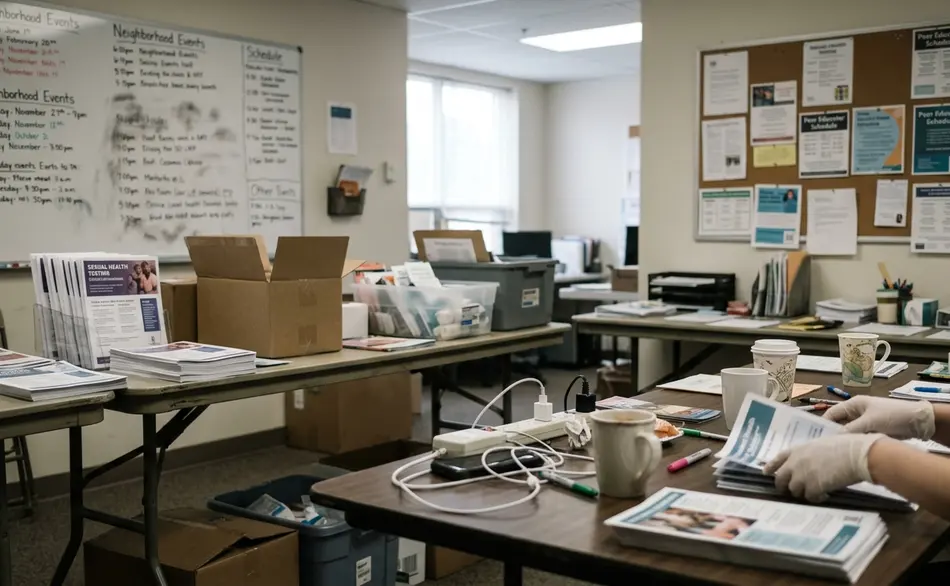
The work is not to make celebrity culture clinical. The work is to translate clinical truth into language people already use without stripping out accuracy.
Bridging Communication Gaps in Youth Demographics
Using familiar voices to translate complex clinical information into accessible language
Young people do not reject health information because they dislike facts. They reject health information when it arrives in the wrong shape.
When designing a recent digital campaign, organizers initially tested long-form clinical Q& A videos but dropped them in favor of short audio clips overlaid with grassroots advocate commentary. That was not a retreat from substance. It was a format correction.
A long clinical brief can become several short-form social media posts if the team respects the material and the audience. One post can explain why testing matters. Another can show what happens at a clinic. Another can address confidentiality. Another can normalize bringing a friend. The point is not to compress everything into one perfect message. The point is to build a sequence that a young person can actually absorb between school, work, family obligations, and their phone lighting up every few seconds.
The role of digital platforms and social media in amplifying advocate-led campaigns
Timing is strategy.
Campaign assets aimed at teens and young adults often perform better when deployed in the late afternoon and early evening, local time, aligning with post-school digital activity. That window is not a gimmick. It reflects the daily rhythm of the audience: the bus ride home, the shift before dinner, the scroll after practice, the private moment before someone has to be “on” for family again.
Community feedback indicates that youth want sexual health content that feels direct without sounding like a lecture. They want privacy cues. They want to know whether the clinic will be weird. They want to know if the test hurts, if they need insurance, if someone will call their house, and what happens if the result is positive.
A familiar voice can ask those questions out loud. That is the bridge.
Case examples of successful integration between media figures and grassroots organizations
The strongest integrations treat the celebrity moment as the opening act, not the whole show.
Picture a local campaign built around a national HIV testing message. The media figure records a short video saying that knowing your status is part of protecting yourself and your community. A neighborhood organization reposts it with clinic hours. A peer educator stitches the video with a plain-language walk-through of the testing visit. A youth advisory group comments with bus routes, confidentiality reminders, and “bring a friend” language that sounds like it came from real life because it did.
This is where credibility forms. Not in the logo stack. In the handoff.
Field Note: If a celebrity message cannot be localized within the same day, it may be too broad for youth sexual health work. The audience should not have to hunt for the help the campaign is promoting.
Scope and Limitations of Celebrity-Led Campaigns
Recognizing that media advocacy is a supplement to, not a replacement for, clinical education
A celebrity can make testing feel normal. A clinician, counselor, or trained health educator still has to explain the details.
This boundary protects everyone. The advocate should not be expected to answer every question about HIV prevention, PrEP, STI symptoms, consent, disclosure, or treatment. Their role is to open the conversation and point toward qualified support. The clinical team’s role is to provide accurate, compassionate care once interest turns into action.
Public health communication works best when the celebrity message is simple and the support system behind it is ready. The CDC offers useful research on health communication strategies for teams thinking through audience, channels, and message design.
The risk of message dilution or misinformation if advocates are not partnered with public health experts
The danger is not only that an advocate says something wrong. Sometimes the danger is that they say something almost right.
Almost right can travel fast. A vague line about being “clean” can reinforce stigma. A casual comment about testing can leave out window periods. A prevention message can make it sound like one method fits everyone. In sexual health, language carries weight because people use it to make decisions about their bodies, partners, and futures.
One catch: relying on high-profile figures for health messaging requires the advocate to maintain a consistent, controversy-free public profile during the campaign’s active window, otherwise the clinical message risks being overshadowed by unrelated media cycles. That is not moral panic. It is media mechanics.
Important: A campaign should give advocates approved language, referral points, and escalation contacts before anything goes live. Creative freedom matters, but accuracy matters more when health decisions are involved.
Temporal limitations of viral campaigns versus sustained community health initiatives
Virality has a short half-life.
A typical viral advocacy cycle sustains peak public interest for roughly two weeks before requiring secondary grassroots intervention. Health educators track inbound inquiry volume across regional clinics and watch for the decay rate of hotline calls. Once daily call volumes taper, teams transition back to evergreen community messaging.
That does not mean the campaign failed. It means attention behaved like attention. The mistake is pretending a spike can do the work of a system.
Sustained care looks quieter: clinic reminders, peer-led conversations, school-based referrals, mobile testing events, follow-up texts, and community workers who know the difference between “I’m good” and “I’m scared.”

Integrating Media Advocacy with Grassroots Action
Strategies for local health organizations to build on national celebrity campaigns
Local organizations should prepare before the celebrity moment hits, not after.
That preparation starts with mapping the national talking points against local capacity. If the advocate says, “Get tested this weekend,” the local team needs to know which clinics are open, which sites welcome walk-ins, which partners can handle youth referrals, and what transportation barriers may show up by neighborhood.
Local outreach coordinators map follow-up strategies by aligning national celebrity talking points with available local resources. In practice, that can mean distributing updated testing site directories to community health workers within a day of a major media announcement. In some cases, federal research grant funds have supported extended clinic hours during the first weekend after a viral campaign.
Creating actionable next steps for youth inspired by media advocates
The best next step is small enough to start today.
- Find a nearby HIV or STI testing site and save the address.
- Text a trusted friend and ask them to go with you.
- Check clinic hours before leaving home.
- Write down questions about privacy, cost, symptoms, or prevention.
- Follow a local health organization, not just the celebrity who sparked the conversation.
For young people, action often begins with confidence. Not perfect confidence. Just enough to click, call, walk in, or ask one honest question.
Building sustainable partnerships between media entities and community health workers
Sustainable partnerships are built in the slow season.
Media teams and community health workers should know each other before the campaign brief arrives. They should agree on language, referral pathways, risk review, youth privacy concerns, and who updates information when clinic capacity changes. That kind of planning is not flashy, but it keeps a public moment from collapsing under its own attention.
I trust celebrity-led sexual health campaigns when they respect the ecosystem: the advocate who opens the door, the digital team that shapes the message, the community worker who answers the real question, and the clinic that receives the person who is finally ready.
That is the theory from first principles. Attention is only the start. Care begins when attention becomes access.






Your Thoughts
The conversation starts with you.
Your Comment