
Taking control of your sexual health is the ultimate flex. Knowing your status empowers you to make informed decisions, protect your partners, and care for your own body. But figuring out where to go, what it costs, and who will find out can feel overwhelming. You deserve access to real, no-nonsense facts about navigating testing.
Finding a testing center that respects your privacy and your wallet requires a bit of strategy. Let us break down exactly how to locate and use free, confidential testing resources in your community.
Decoding Privacy: Confidential vs. Anonymous Testing
Before you even look up a clinic, you need to understand how your personal information is handled. The terms "confidential" and "anonymous" are often used interchangeably. They are not the same thing.
Confidential testing means your name and results are tied to your official medical record. This is standard practice at most doctor's offices and hospitals. Your privacy is highly protected by HIPAA laws, which mandate that confidential medical records be retained for a minimum of six years. Only authorized healthcare providers involved in your care can access this information.
Anonymous testing operates differently. No name is ever recorded. When establishing intake protocols, clinics often separate anonymous testing into a distinct workflow using alphanumeric tokens rather than integrating them into the main electronic health record system. You receive a unique ID number, and you use that number to retrieve your results. Anonymous testing tokens are typically purged from active clinic logs within roughly 30 to 60 days post-result retrieval.
Age of consent laws for sexual health services also play a massive role here. These laws vary widely by jurisdiction, but they often protect minors seeking testing without requiring parental notification.
Step-by-Step: How to Search for Free Local Clinics
Community need for accurate clinic information is constant. Initially, outreach coordinators attempted to maintain a centralized, static PDF directory of local free clinics. They dropped it after realizing operating hours and funding statuses changed too rapidly. Static lists simply do not work.
Instead, you should use official government locator tools. The CDC's GetTested platform is the most reliable starting point. Federal locator tools update their clinic databases on a bi-weekly to monthly cycle. You can easily filter your search results by 'free' or 'low-cost' parameters.

Once you find a location, cross-reference the clinic listing with your local community health department website. This ensures you have the most up-to-date operating hours. A clinic listed as 'free' might exhaust its monthly grant allocation for no-cost testing by the third week of the month. Always call ahead to verify their current funding status.
Evaluating Clinic Accessibility and Environment
Community feedback indicates that the vibe of a clinic matters just as much as the medical services provided. You want a space that feels safe and affirming. Look for clinics that explicitly state they offer youth-friendly or LGBTQ+ inclusive services.
The definition of 'youth-friendly' varies. A municipal health department might define it simply as allowing minors to self-consent, whereas a community-based organization defines it through peer-led counseling and extended after-school hours. To determine true youth-friendliness, community health boards evaluate clinics based on environmental audits. They prioritize sites that offer walk-in windows in the late afternoon to accommodate high school schedules.
Community-based organizations (CBOs) often provide a more relaxed, culturally relevant environment than traditional hospitals. They frequently allocate specific 2- to 4-hour blocks exclusively for youth drop-ins. In these spaces, youth-specific waiting rooms are physically separated from general adult STI clinic populations to reduce stigma and anxiety.
Practical Accessibility Factors
Beyond the environment, consider the logistics of getting there. Check for proximity to public transit. Verify if they accept walk-ins or if you must schedule weeks in advance. A clinic is only useful if you can actually get to it.
Preparing for Your Appointment: What to Bring
Walking into a clinic prepared reduces anxiety and speeds up the intake process. Intake coordinators design pre-appointment checklists to minimize lobby wait times. They explicitly list acceptable alternative IDs like school IDs or library cards after noticing young patients frequently lack state-issued driver's licenses.
Identification requirements depend entirely on the type of test you choose. Anonymous sites require no ID whatsoever. Confidential sites will require some form of photo ID to match your medical record.
Field Note: Prepare a brief list of questions regarding testing windows. Fourth-generation HIV antigen/antibody tests require an 18- to 45-day window post-exposure for maximum accuracy. Bacterial STI swabs typically require a 5- to 14-day incubation period before yielding reliable results. Testing too early can result in a false negative.
You generally do not need to bring parental consent forms in jurisdictions where minors can self-consent to sexual health care. There is one catch. Self-consent laws for minors seeking sexual health services vary drastically by jurisdiction, meaning a 16-year-old might access an HIV test without parental notification but still require a guardian's signature to receive a preventative HPV vaccine during the same visit.
Understanding the Scope and Limitations of Free Testing Sites
Free clinics provide an excellent service for community health, but they operate under strict constraints. Acknowledging these limitations helps manage expectations.
Free clinics frequently experience high patient volumes. During peak testing seasons, such as the weeks following spring break or local pride events, walk-in wait times at free municipal clinics can extend from a standard 45 minutes to upwards of three hours. Certain free centers cap their daily walk-in slots at 15 to 20 patients per provider. Arriving early is essential.
Funding fluctuations occasionally impact the availability of certain rapid tests or free treatment options on-site. Public health administrators frequently have to triage resources during funding gaps. They prioritize rapid HIV and Hepatitis C diagnostics over comprehensive bacterial panels when state-supplied testing kits run low. You might need a referral for comprehensive bacterial STI swabs.
Important: You might assume a 'free clinic' covers all lab fees—only to receive a surprise bill from a third-party diagnostic laboratory because the clinic's grant only covered the physical exam. Always ask clarifying questions before providing a urine or blood sample.
Pre-Call Verification Script
Use these questions when calling a clinic to ensure services are truly free and accessible:
- Confirm cost: "I do not have insurance. Will the test and the lab fees be completely free?"
- Verify ID requirements: "What exact forms of ID do you accept for someone my age?"
- Check test availability: "Are you currently offering full bacterial swab panels, or just rapid HIV/Hep C tests today?"
Navigating Post-Test Protocols and Support Systems
Taking the test is only the first step. Understanding how you will receive your results and what happens next is equally critical. Standard procedures for receiving results include in-person counseling, secure patient portals, or phone calls. Anonymous tests almost always require you to call in or return in person with your unique token.
If a test returns positive, you are not left to figure things out alone. Linkage-to-care specialists step in immediately. They structure post-test counseling to immediately transition positive results into actionable treatment plans, ensuring the first medical appointment is scheduled before the patient even leaves the building. Standard protocol dictates that rapid reactive results are followed by a confirmatory blood draw, which takes 3 to 5 business days to process through a state or commercial laboratory.
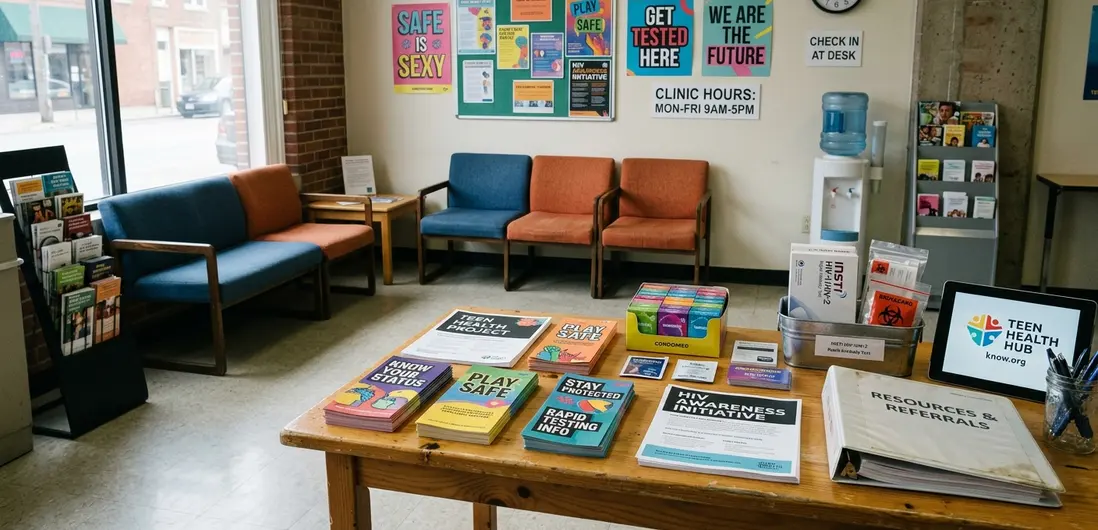
While our methodology relies on self-reported intake logs to track resource distribution, the data clearly shows that clinics do more than just test. They are hubs for prevention. Take advantage of the free preventative resources often provided on-site. You can usually grab free condoms, dental dams, and lube in the waiting area.
Bottom Line: Many clinics now offer on-site PrEP navigators. If you are interested in taking PrEP to prevent HIV, these navigators can help you access the medication for free or at a very low cost. They typically require a 30-minute consultation to assess kidney function history before initiating a prescription referral.
Your sexual health is a lifelong journey. By using free and confidential testing centers, you are taking a powerful step toward protecting yourself and your community. Find a clinic, ask the right questions, and own your status.







Your Thoughts
The conversation starts with you.
Your Comment