
A community HIV remembrance event is a structured public gathering that honors lives lost to HIV/AIDS through tangible archival displays, spoken readings, and tribute panels while directly connecting attendees to contemporary preventive care and support systems. Organizing these spaces requires equal devotion to historical reverence and modern public health action.
Bridging Historical HIV Memorials and Youth Prevention Access
Young people attending an HIV remembrance gathering often encounter the early history of the epidemic as an unfamiliar, distant archive. Without lived memory of those earliest decades, youth audiences need a deliberate educational bridge that links historic grassroots survival and advocacy to present-day health equity. When an exhibition displays archival photographs, handwritten letters, or hand-sewn quilt panels in isolation, the imagery of historical loss can inadvertently trigger fear or deepen stigma around testing.
I approve an event schedule or floor plan for final production only when every historical memorial component is physically or programmatically paired with an active public health resource or educational takeaway. This pairing acts as our core operational criterion. If a display panel documents the losses of an earlier decade, the accompanying curator placard and nearby outreach table must explain modern biomedical realities in plain, affirming language.
Young attendees see the lineage of community care in practice. They read about early advocates fighting for treatment access, and within the same room, they find clear pathways to free rapid HIV testing, pre-exposure prophylaxis (PrEP) navigation, and affirming sexual health clinics. Presenting historical struggle alongside contemporary tools empowers youth to honors those lost by protecting their own health and supporting their peers.
Context Over Fear
Never display archival imagery of severe illness without accompanying plain-language explanations of modern antiretroviral therapy and daily prevention options. Context transforms potential fear into active health empowerment.
Designing Accessible Tribute Layouts and Quiet Reflection Zones
Before a single tribute panel goes up, a venue floor plan often starts as an empty multipurpose hall with echoes, glaring overhead fluorescent tubes, and standard folding tables. When organizers drop fragile memorial displays into an unmodified room, bottlenecks form around emotional artifacts, wheelchair users struggle to navigate tight corners, and the amplify-everything acoustics of a community hall turn spoken readings into overwhelming background noise.
During setup, we transform the physical footprint through measurable spatial checks. Venue layout begins with mapping a completely step-free circulation route from the primary entrance through the exhibition floor to the exit. We measure and tape off a minimum 36-inch aisle clearance around all freestanding tribute panels so visitors using wheelchairs, walkers, or strollers can turn and pause without blocking foot traffic. Lower display tiers are elevated or angled at a seated viewing height so a person sitting in a mobility device has an unobstructed line of sight to bottom-row narratives and photographs.
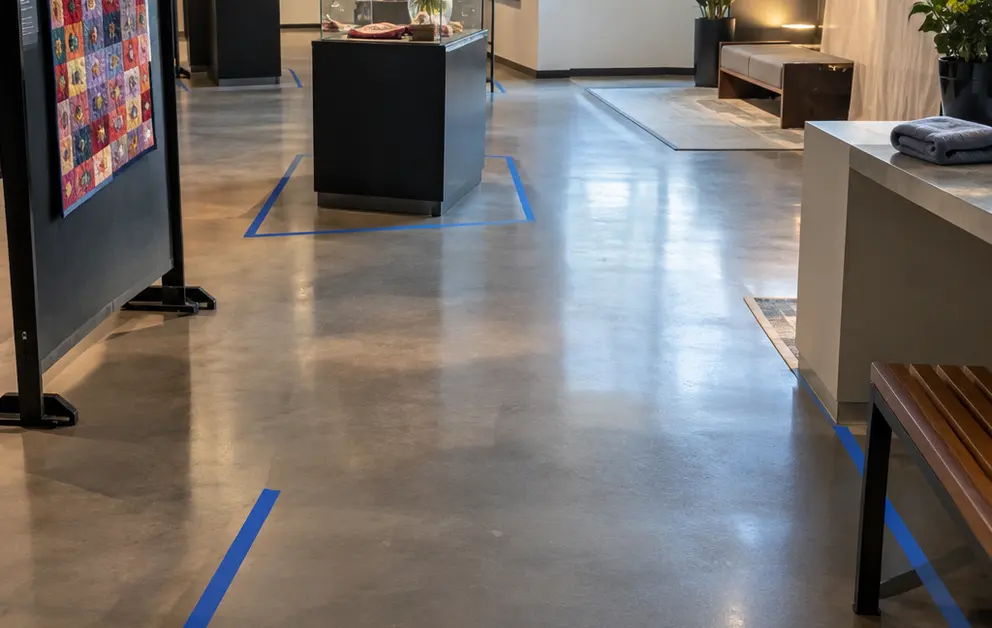
Emotional accessibility requires just as much floor planning as physical clearance. We always partition a dedicated quiet reflection zone well away from the main entrance and stage speakers. Using fabric privacy screens or an adjacent side room, we stock this lower-traffic space with comfortable seating, boxes of tissues, and soft, low-glare ambient lighting. Anyone experiencing acute grief can step away from the main walkways and recover in privacy.
Acoustic separation completes the spatial layout. Spoken-word reading stages and conversational resource tables need distinct acoustic footprints to prevent sensory overload and preserve medical privacy. We verify this separation during a pre-door sound check: while a volunteer tests the stage microphone at speaking volume, two navigators hold a normal-volume conversation at the resource tables. When that table discussion remains clear and private without requiring raised voices, the room layout is ready for doors to open.
Archival Verification and Family Consent Protocols for Personal Tributes
Surviving family members, chosen family, and community elders frequently hold deep, valid anxieties about how their loved ones' lives and medical histories will be represented in public. Stigma surrounding HIV/AIDS has historically fractured families and complicated public mourning. Assuming that an old photograph, letter, or quilt panel previously shared in a private support group or online thread carries implied permission for open public exhibition breaches community trust.
To protect both the honorees and the living contributors, we enforce a strict written verification protocol weeks before the event doors open. Every personal photograph, biographical narrative, letter, or physical artifact requires a signed written release from the surviving legal family member, chosen family representative, or original creator. Rather than a blanket waiver, our intake form breaks archival consent into three distinct operational tiers:
- Full-Name Public Exhibition: The contributor explicitly clears the honoree's full legal or chosen name, facial photographs, dates, and cause-of-death narratives for unrestricted public viewing throughout all event hours.
- Anonymized or Closed-Hour Display: When a family requests privacy regarding sensitive medical details or family identity, curators modify the placard to display only first names or initials, or restrict the physical artifact to closed, unphotographed community viewing hours before the general public enters.
- Immediate On-Floor Withdrawal: Every contributor retains the absolute right to modify or remove their artifact at any stage of setup or live exhibition. If a surviving partner or parent arrives at the venue, sees a letter on the rack, and feels overwhelmed by its public presence, floor leads remove and return the item immediately without administrative friction or debate.
When displaying legally loaned municipal or historical society archives rather than personal community contributions, standard institutional loan agreements and local privacy statutes govern display terms rather than informal family withdrawal protocols.
Zero-Friction Artifact Removal
Brief every floor lead on the withdrawal protocol before doors open. If a contributor asks to take down a personal photograph mid-event, staff must unclip and hand over the item in under two minutes with complete compassion and zero paperwork.
Training Outreach Volunteers for Grief-Aware Floor Support
A remembrance exhibition brings together individuals carrying fresh personal loss, elders revisiting decades of community grief, and young adults learning about the epidemic's human toll for the first time. Well-meaning outreach volunteers who lack clear behavioral training can inadvertently intrude on private moments of mourning or find themselves pulled into deep psychological distress that exceeds their training.
We prevent floor burnout and protect attendee boundaries by conducting a structured pre-event briefing focused on behavioral observation and active listening. I train station monitors to apply a clear decision criterion before approaching a visitor: volunteers initiate verbal outreach only when an attendee makes sustained eye contact, asks a direct question, or displays visible physical distress such as hyperventilating or steadying themselves against a rack. Visitors who are silently weeping, reading quietly, or standing in solitary contemplation are left completely undisturbed.
When an interaction does begin, volunteers use gentle, non-intrusive conversational prompts that offer presence without prying into personal trauma:
- "Thank you for spending time with the panels tonight. Please let me know if you would like some water or a quiet place to sit."
- "We have a private reflection area just behind that screen if you ever want a moment away from the crowd."
- "If you have any questions about the history on this rack or the community resources by the exit, I am right over here."
Maintaining a strict operational boundary between volunteer active listening and licensed clinical or grief intervention keeps everyone safe. Outreach monitors never attempt unlicensed grief counseling on the exhibit floor. If an attendee expresses acute emotional crisis, the volunteer calmly walks them to the partitioned quiet reflection zone and connects them with designated mental health support staff. If an attendee asks about their own risk, partner testing, or modern treatment, the volunteer walks them toward the exit-path resource navigators. To protect our team's emotional stamina, we enforce a strict rotation schedule that gives every volunteer stationed beside emotionally intensive memorial panels or reading podiums a mandatory 15-minute decompression break in a private staff area every hour.
Connecting Attendees to Rapid HIV Testing and PrEP Navigation
Moving directly from a deeply emotional tribute panel to a clinical health consultation can feel jarring if the physical and conversational transition is poorly managed. If an outreach table forces young people to loudly announce their desire for an HIV test or PrEP consultation across a crowded walkway, many will walk straight out the door to avoid public scrutiny.
We resolve this by positioning our contemporary sexual health resource stations along the primary venue exit path, maintaining a respectful physical buffer from the solemn memorial racks while ensuring every departing attendee passes the navigation table. This placement creates a natural progression from honoring the past to taking practical action for one's own health.
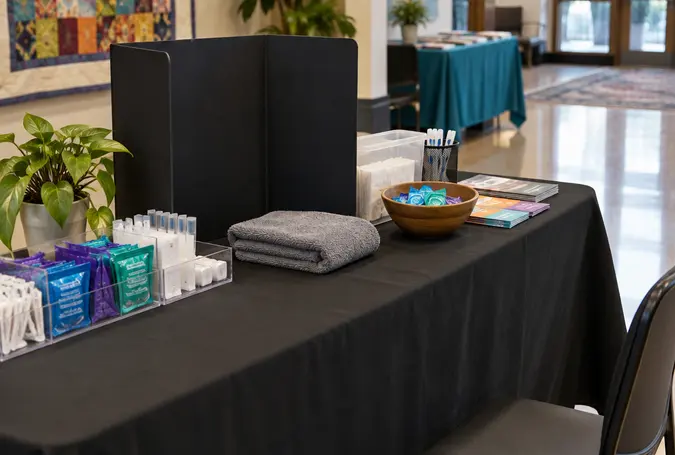
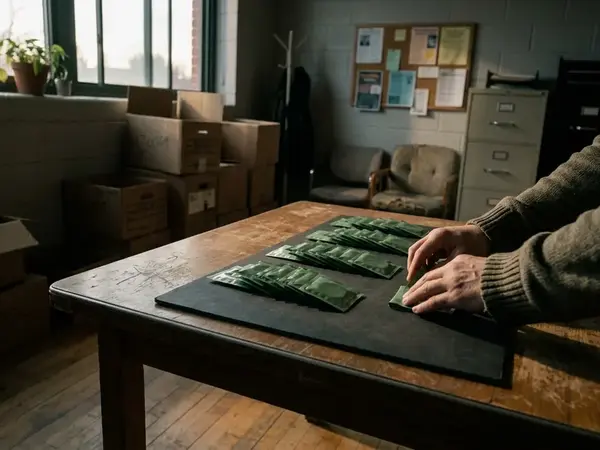
Before the gathering begins, navigators stock the surface with discreet, pocket-sized referral cards that fit completely inside a palm or standard jeans pocket. Rather than forcing attendees to carry bulky, brightly colored medical brochures through a public lobby, these compact cards list local rapid HIV testing walk-in hours, youth-accessible clinic addresses, free condom pickup sites, and direct contact numbers for PrEP navigators. We arrange the cards in self-serve stacks across the front edge of the table so anyone can pick one up silently without breaking stride.
For visitors who want to speak with an outreach worker, navigators stand ready beside a small, recessed check-in counter equipped with a digital tablet or confidential intake slips. Here, staff provide affirming, plain-language explanations of how rapid oral or finger-prick HIV tests work, how daily or injectable PrEP prevents HIV transmission, and how modern treatment allows people living with HIV to live long, healthy lives with untransmittable viral loads. When a young person asks to book a testing appointment or a PrEP screening, the navigator steps roughly two paces back into a buffered side alcove to record their contact preference privately.
Community HIV Remembrance Event Readiness Checklist
- Signed archival consent forms verified for every personal photograph, letter, and tribute panel, noting any anonymity or closed-hour restrictions.
- Withdrawal protocol communicated to floor leads for immediate, friction-free artifact removal if requested by surviving family or chosen family.
- Step-free venue circulation route mapped with a minimum 36-inch aisle clearance around all freestanding tribute racks and seated viewing angles for lower display tiers.
- Quiet reflection zone partitioned away from stage speakers and entry doors, stocked with seating, tissues, and soft ambient lighting.
- Acoustic separation verified during pre-door sound check so normal-volume conversations at resource tables remain private while the stage microphone is active.
- Volunteer rotation schedule posted with mandatory 15-minute decompression breaks and clear boundaries separating active listening from clinical crisis referral.
- Exit-path sexual health navigation table stocked with palm-sized rapid HIV testing and PrEP referral cards alongside a private space for appointment scheduling.
Executing a Two-Hour Evening Tribute at a Local Youth Center
A two-hour evening remembrance display and resource fair in a local youth center's multipurpose room can follow this operational timeline from four weeks out through the final pack-down:
- Four Weeks Prior (Archival Intake and Consent Verification): Collect signed written consent forms for the six locally contributed tribute panels scheduled for display. Review each release line by line to confirm that all six contributors permit full names, photographs, and biographical text to be exhibited in an open youth space, and log the designated return contact for each piece.
- Three Hours Before Doors (Accessible Floor Setup): Assemble the central display racks in the center of the multipurpose room and use high-visibility painter's tape to mark a 48-inch accessible perimeter walkway around the entire installation. Set the bottom row of tribute panels at a slight upward tilt so seated visitors and wheelchair users can read the text comfortably.
- Two Hours Before Doors (Zone Partitioning and Table Placement): Roll fabric privacy dividers across the room's side alcove to form the quiet reflection space, setting up four upholstered chairs, two low lamps, and boxes of tissues inside. Position the HIV testing referral and PrEP navigation booth directly adjacent to the main exit doors, arranging palm-sized clinic cards along the front edge and setting two chairs behind a side screen for confidential appointment scheduling.
- Forty-Five Minutes Before Doors (Acoustic Check): Test the reading podium microphone at the front of the room while two navigators hold a quiet intake conversation at the exit booth. Adjust the speaker angle until the podium voice carries clearly to the seating rows without bleeding into the exit alcove.
- Thirty Minutes Before Doors (Volunteer Briefing): Gather all floor monitors and outreach navigators for a 30-minute huddle. Assign the hourly rotation schedule with mandatory 15-minute break slots in the staff office, rehearse the three non-intrusive verbal check-in prompts, and confirm who is staffing the quiet reflection alcove for crisis handoffs.
- Hour One of Live Operation (Opening Reading and Quiet Viewing): Open the doors and allow attendees 20 minutes to circulate around the 48-inch perimeter walkway before starting a 15-minute spoken historical reading at the podium. Keep floor monitors stationed at the corners of the room, watching for sustained eye contact or questions while leaving quietly reflecting visitors undisturbed.
- Hour Two of Live Operation (Active Navigation and Exit Flow): As the spoken program concludes and youth attendees begin moving toward the exit, staff the navigation table with two outreach workers. Offer self-serve pocket referral cards to departing guests and step behind the side screen with anyone requesting a specific clinic slot for rapid HIV testing or a PrEP consultation.
- Post-Event Closeout (Artifact Return and Referral Transfer): Once the final attendee exits at the two-hour mark, staff inspect all six borrowed tribute panels, pack them into protective sleeves according to each contributor's return instructions, and transfer the evening's confidential testing appointment requests directly to the partnering clinic navigator for next-day follow-up.




Your Thoughts
The conversation starts with you.
Your Comment